The return of Tiny Vipers.
Tormentor and the keys to feeling good.

The porous nature of genre and status boundaries were one of the elements that made “indie rock” a continually interesting development in music. By the early 2000s there were established artists who’d become something of household names and labels whose reputations had grown as they both reaped the benefits of these artists successes and continued to search out and foster new talent. Finding new ways and places to get the word out as the internet was starting to become the central churn was a challenge.
One of the more artful series of that time, specifically between 2004 and 2007 was the Trixie Films series called Burn to Shine. Started by filmmaker Christoph Green and Fugazi drummer Brendan Canty, the company would choose a city, a curator, and a building set for demolition then give each chosen artist / band an hour to set up and play a song that was then filmed with no overdubs. At the end of filming the house was destroyed and the music was the last record of the space.
Volume five of the series, filmed in Seattle in January of 2007, was my introduction to Tiny Vipers. Among the better known names like Harvey Danger, Benjamin Gibbard (of Death Cab For Cutie), and Eddie Vedder, Jesy Fortino’s performance of the song “On This Side” from her first album, Hands Across the Void, which would be released later that year by Sub Pop, was by far the most mesmerizing.
The presentation of acoustic guitar and voice is a classic entry point for listening, and while Fortino’s approach didn’t rely on technical mastery of the instrument or vocal perfection, something in the commitment to the song and its circumvention of the obvious tropes felt attractive and new. This extended to the rest of that first album as well as the follow up, Life on Earth, which came out in 2009. But then things progressed in a slightly unexpected manner.
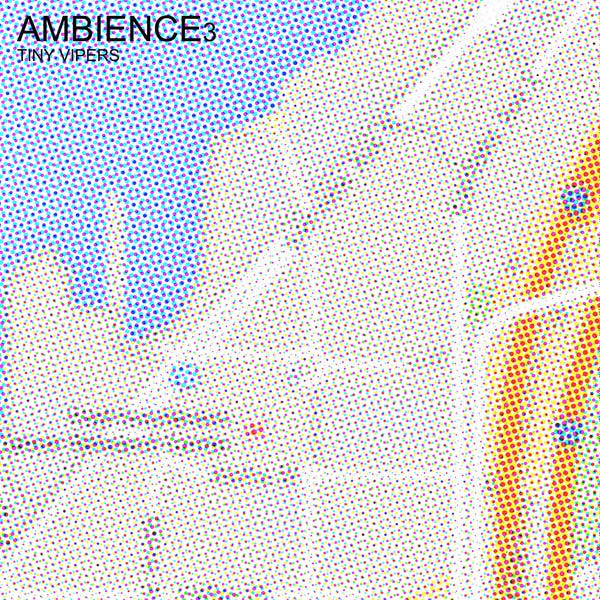
Working with Liz Harris aka Grouper, she and Fortino formed a duo called Mirrorring and released one album called Foreign Body for kranky records in 2012. The mix of quiet arcane folk and enveloping ambience made for a very satisfying listening experience. Rather than returning to the guitar and voice format, Fortino took some time off and went back to school to get an engineering degree. On the musical side she spent some time exploring keyboard and electronic set ups, eventually releasing an EP in 2015 called Ambience 3 with artwork modeled after the Brian Eno album covers of the time.
This was followed in 2017 by an album called Laughter on the Ba Da Bing! label, also in a very experimental and ambient mode. As time passed this shift in directions, while very fully realized and intriguing, served to make those first two albums seem even more mysterious. And then things went quiet again, until this year. The first break came with the release on Bandcamp of Illusionz Vol. 1 (1997 - 2004), a relatively modest collection previously unreleased songs from the early days of her output.
This had the desired effect of whetting the appetite for all new material, which Fortino graciously provided with the release of Tormentor at the start of November this year. While it isn’t exactly a “pick up where we left off” kind of album, it felt like a new chapter of a story in progress, revisiting familiar places but through a lens changed by life experience and adapted to a more mature point of view. I had the good fortune of presenting Jesy Fortino with a few questions about the new album and to get her feelings about her music both present and past.
—
Do you ever revisit videos from some of your early performances and what your relationship is now to you as a performer back then?
I revisit that period sometimes. I’ve been compiling tapes of unreleased music from those years for my Illusionz series. It was a really strange time in my life. I had just been signed to Sub Pop, which was a big deal to a lot of people, and so surreal to me that it almost didn’t feel real. Suddenly I was a “real musician.”
I was excited, but the excitement turned into anxiety fast. I was in my early 20s, still trying to figure out who I was, and I knew nothing about business or contracts. I was working in a fast food restaurant and was genuinely scared of losing my job if I toured too much, but also felt pressure to tour even though the money wasn’t great. I felt torn all the time.
I kept making demos for the “big record” and throwing them out because I worried they didn’t sound “indie” enough. Looking back, it’s wild to hear all those discarded songs — I can’t wait to release them.
It’s embarrassing to admit, but I really wanted to “do a good job” for the label, the promoters, all the business people around me. It was the first time anyone had “invested” in me, and I was terrified of letting them down or having them revoke my status as a “real artist.” A lot of validation and ego stuff was wrapped up in that.
Try to imagine going from a lifetime of fast food jobs, no education, barely any performance experience outside coffee shops and punk houses… to suddenly being signed to Sub Pop. That was me. And I wish I could say none of it mattered — that I didn’t care about the expectations or the money — but I was broke, and it felt good to be told I was important somehow.
In hindsight, I wish I had more confidence, more sense of my own value outside of industry metrics. It took a long time to learn that playing music that makes less money doesn’t mean the music itself has less value. Value isn’t the same thing as earning potential. I really apply those lessons in my new song writing and in the production of Tormentor. It’s completely written for the sake of the story of the songs. It’s not a commercial enterprise. Feels good.
There are many ways to write a song, but I feel like the two main branches are artists that use a kind of formula to slot their music into and those, like you, I think, who appear to find the songs organically, often in the playing of them. Do you have a regular ritual for writing, or is it something more elusive?
Finding ways to remember what I am working on while I am creating is key to my process. Tablature, recordings of sketches, voice recordings that explain how to play the guitar parts or how I wish the performance to be, even if I haven’t got it down yet. Making time to listen to those sketches and refine them. So many tapes. I have hundreds of tapes of these sketches.
It takes a long time for me to write songs. “Simulate” and “American Prayer” each took over a decade to complete. Playing open mics is important. Over and over, every week to get the performance down in a low pressure environment. Having an audience really shines a spotlight on details of song structure that are hidden from me when I play alone in my room.
Has your process changed in any way over the years?
My process has changed a little over the years. Now that I have obtained the rights to all my music and no longer choose to work with labels, I am the sole investor and I don’t have to worry about making other people money anymore. That frees up a lot of emotional bandwidth.
I still have the drive to make the songs “perfect” by my standards but it doesn’t have to scale up or be appropriate for radio play or commercials. Doesn’t have to make money for anyone.
Nothing inspires me less than industry people reminding me that I am in the red, that ticket sales aren’t where they need to be, that engagement is too low or whatever. Now I can focus on making the song exactly how I want it without the noise. I can nail that small detail in the song that no one cares about but me.
While Tormentor seems like a return to the forms from your early Sub Pop releases, there are touches that refer also to the more experimental work you’ve done. Was it important to you to bring together these approaches? Do you view the sounds and songs as being on parallel tracks or do they help inform each other for you in some way?
I think of the instrumental or abstract pieces as framing the stories of the songs, so that there is a sense of the world that these stories take place in. Tormentor is about telling stories from my life. When I play it live I hand out the lyrics because they are such an important part of the songs. I decided to basically use no effects on my vocals because I wanted the attention to be on the words.
In the stretches where you’d taken time away from performing and releasing music were you still writing and experimenting with it?
When I stepped away from music I did so because I thought I had failed. I was incredibly embarrassed by my “career” and I tried to pretend like it didn’t happen.
At work or in school, I felt ashamed when people found out I was ever a musician. I would try to change the subject if it ever got brought up. My connection to music was something I hid. I felt as though I had all the opportunities in the world and I still ‘failed’ compared to my colleagues (i.e Fleet Foxes, Grouper, Band of Horses, etc.) I felt as though they figured it out and I didn’t and that I was stupid and untalented and a letdown to anyone who had invested in me.
I was in the red with the label and when I did play shows I didn’t sell enough tickets... etc. I wasn’t making anyone any money and I interpreted this as having no value. So I stopped playing music and went to college to figure out a career.
Again, I am super embarrassed to admit any of this but I think it’s important for people to hear because I think this mind set is a bad trap that some people can fall into and I want people who are currently in that trap to know that they aren’t alone. Lots of us feel like shit at times.
Were there artists you heard in that time that made you feel like there was a space waiting for you to come back?
No, I didn’t think there was a space waiting for me when I came back to music. And as far as I was concerned I didn’t want to go back to music. Music was the “land of disappointed investors” and I hated it there. When music popped into my mind, I quickly told myself that the ‘music world’ had nothing to do with me and that it was a childish dream and a fluke that I was ever there at all. I put it out of my mind as fast as I could. I listened to mostly nature sounds. Like recordings of rain or thunderstorms. If I saw a guitar I’d quickly look away because it brought up so many emotions.
Now, on your Instagram and in a recent interviews, you appear to be quite involved participating in and promoting local performances in your area. How important do you think community is, especially in this era where social media and streaming platforms can appear to be a substitute for “in person” gatherings?
To me, to be able to keep playing music and feel inspired, it’s crucial to connect with other musicians, artists, and people who believe there’s real value in art, life, and each other beyond potential to make someone money, especially if you’re in this for more than business.
You may not earn much—or anything at all—from your art, but the creation can still make people feel connected, loved, seen, and understood, and it can reframe even tiny moments so they become meaningful.
I’ve always loved folk music because it sort of brings attention to the parts of everyday life that are often overlooked or ignored. So many movies or tv shows or other media are about big fantastical things or the lives of people who get to do more with their lives than work 40 hours weeks and it can result in making us feel like our everyday lives don’t matter in comparison. I like that folk songs are usually about little things that we all share. I think it’s beautiful. I like to create and participate in spaces where people can tell their weird little tales about their weird lives. The inverse of that means I try to stay away from business enterprises in music. It’s to the point that I don’t really even like playing ‘proper’ music venues. I prefer house shows and other places where there isn’t pressure to sell things for other people.
Are there mistakes you’ve made or successes you’ve had that you think still translate to the current climate of making, playing, and releasing music?
Many times throughout my life as a musician I have had business people sort of magically appear and tell me that I am special and that I “deserve more”...they act appalled that I work a day job or even have to think about money.. They tell me that, with their help, I can build a life where I can live without worrying about such common things... like work, rent, debt; That I am not like other people... It was once intoxicating to hear... all the flattery, and the promises. It’s a carrot that they dangle. Like a devil on my shoulder! But what they promise comes at the cost of something more dear than money. And the cost is the belief that my life has intrinsic value. I think we are all regular and we are all artists. Some people have more resources and they get to work less, its not because they love art more and are more committed. That’s silly.
I am like other people, I do need to work, I am scared of not having enough money to feel safe, I can’t be careless about quitting my jobs to tour a lot or do artist residencies. It’s not who I am. It’s not where I came from. I used to think that because I carried these worries, that I was not a ‘true’ artist. But I don’t see it like that anymore. It’s sort of what makes me a folk artist because I think most people carry these worries. I can’t relate to people who don’t work ‘normal’ jobs, I don’t think that makes them more of artists than other people, it just means they have different financial circumstances at that particular moment in time. It’s that simple.
For any young people who might be reading this, if you need to work jobs to make money, that doesn’t make you less of an artist. You wont be able to do all the things artists who don’t have to work can do, but that’s okay. You are not lesser because of this. It’s not your fault. Its just how the cookie crumbled! Its just finances. Its not saying anything about who you are and your commitment to your craft. Keep at it! I want to hear your stories and songs! have faith that they are important.
In releasing the Illusionz Vol. 1 (1997 - 2004) compilation earlier in the year we get a sense that the legacy of your work hold some real importance. How concerned are you with maintaining your history in balance with pushing outwards in new directions?
I had a publicist reach out to me while I was compiling the songs for the first volume of Illusionz. They asked if they could work with me. They said they loved my art and my vision and thought they could help share my story. I told them that I could use help putting out Illusionz and explained that these were songs from the 90s that I made as a teenager. After listening, they called me and said that people won’t write about these songs, they won’t play them on the radio, and ultimately these songs basically wouldn’t make money for anyone, including me. They told me that they couldn’t work with me. It stung for about one day but then I became inspired.
The Illusionz series represents all the music I made over the years that have zero value to industry people. Music that cant make money for anyone. The songs are too raw, lofi, and full of messy life. I can’t wait to release the next wave of songs. The songs I insecurely threw away when I got signed in the early 2000s. They are so wild!
Tormentor, is the first record that is completely mine. I paid for every step of its production so I don’t feel obligated to make any money for anyone. It feels like the first time that I really got to set aside the expectations of making “a hit” and just start telling my stories, just for the sake of wanting to share them. Feels good.
—
You can purchase Tormentor and the rest of the Tiny Vipers catalogue here on Bandcamp.