FIMAV 2026
The push and pull of it all.

I wrote a couple of pieces that reviewed and overviewed the 2024 / 40th edition of FIMAV two years ago, because that’s how time works. This year I’m combining both review and overview into one essay for a quicker fix and because the elements of art and its infrastructure have been bound in my head for the last week, both while attending the festival and in its aftermath.
While the 40th felt a bit of a handoff between festival originator and outgoing artistic director Michel Levasseur and incoming director Scott Thomson, this year’s festival was fully under Thomson’s purview. The byword this year was “accessibility.” In practical, physical terms this involved concerts offered with discounted ticket prices, or free shows that took place on both outdoor stages and a new “Quartier Général” located in Carré 150, Victoriaville’s primary arts and culture space.
Before going into the particulars of these shows, a few thoughts on arts and accessibility. When I was preparing The North Fades a couple of years ago, I wrote a kind of framing essay concerning the academic fabric that can protect, interweave, and sometimes obscure the arts. My educational background is in English Literature and Creative Writing, specifically poetry. What you eventually learn about poetry from within and without the academic milieu is that it is simultaneously prized as a pinnacle of literary expression and also largely locked away from or ignored by the vast majority of readers outside (and a great many within) the same academic milieu.
An anecdote I tell, and told to a few folks at this year’s festival, was how a few years after I’d somewhat detached from the path of writing and publishing poetry, I attended what was dubbed “Poetry Weekend” at UNB in Fredericton. The event featured a great number of writers presenting new work over the course of two days. On Sunday afternoon at the last reading one of the organizers called everyone who had read that weekend up to the stage for a group photo. My surprise came as, once everyone has risen and climbed onto the stage, I was the only one left in the audience. In effect I was the audience for the event — the only non-participant audience, that is.
I think of there being something of a rough analog between literature and poetry that also exists between abstract or conceptual art and painting as well as the “musique actuelle” that FIMAV presents and music in general. Each subset within the greater context presents a kind of bar for entry. What defines the bar and what you can do to lower or remove it is a difficult thing to answer.
In simple terms the two competing principles at play come with elevating the value of the art presented by framing it as somehow at the apogee of its form, and also opening it up to an audience of curious if novice consumers. In the case of music presented at the festival, appreciation comes with a certain kind of insider awareness of the forms and languages used to give voice to the art. This can result in a certain amount of alienation for an audience that is not yet fluent in these languages. There are certainly strategies to make this less of a trial for the uninitiated; real world subtitles if you will. But on the flipside, if we’re being honest, there is an aspect for some of the existing audience of “keeping it for ourselves,” out of the reach of those that might dilute it with something as crass as popularity. It is something akin to the principle of value created by scarcity. Gold would not be valuable if it was as common as beach sand. Is this music valuable to some because other people don’t “get it?” While some might feel they are part of an exclusive club, the problem arises when the club’s dues are too high or its operating budget requires more members to spread the cost around.
So how do you present a festival that doesn’t sacrifice the quality and rarified elements of its music, yet open the doors to a broader audience? The opening concert for this year, and one with a reduced, $10 admission was Amirtha Kidambi’s Elder Ones.
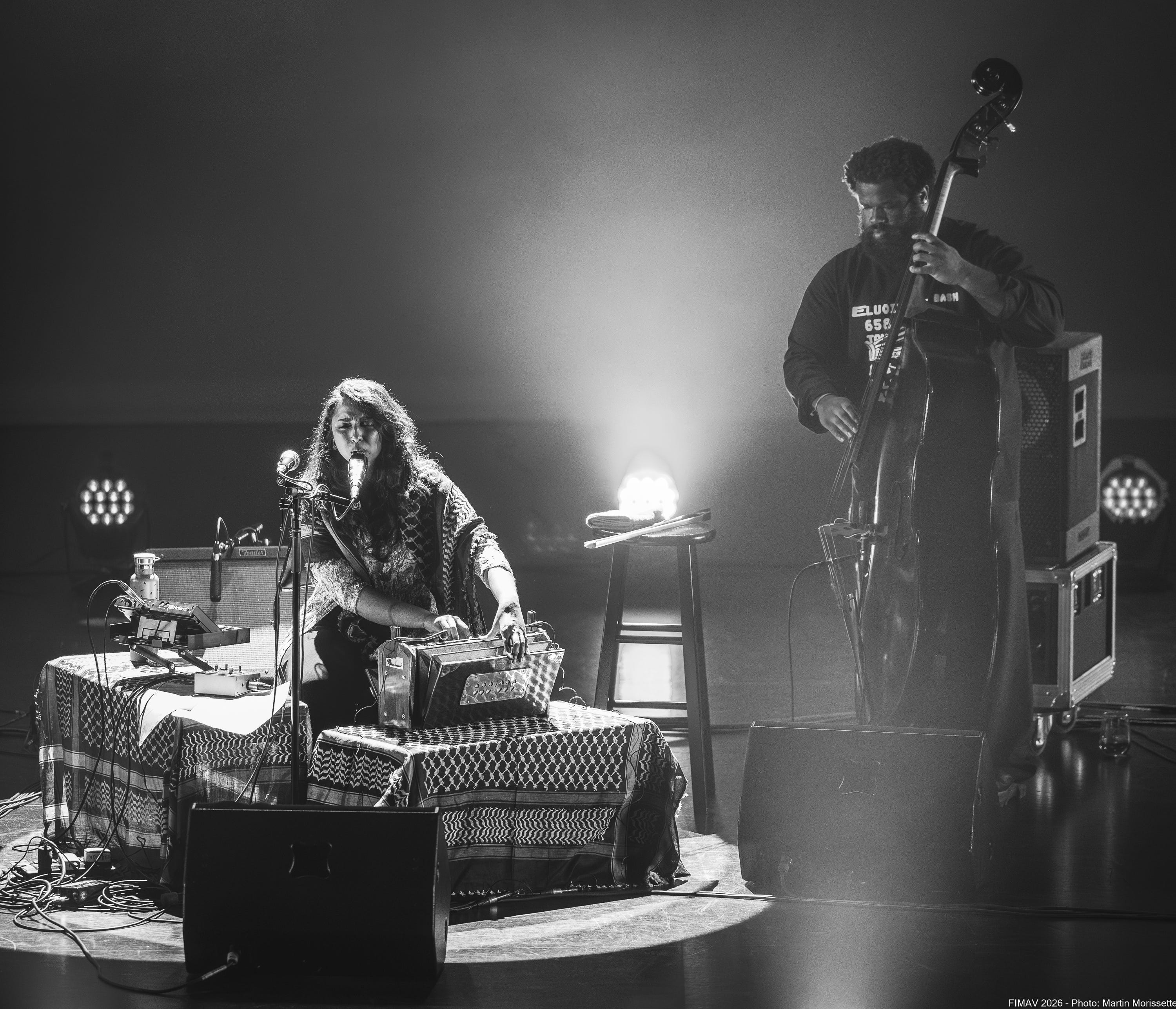
The NYC quintet performed music that was confrontational both in aesthetics and ideology, but by design or by circumstance Kidambi’s extended introductions to each piece gave some context most festival shows don’t usually provide. Her voiced concerns about the current political and cultural climate were the framework for the group’s impassioned music, and importantly in terms of accessibility, these were songs. They were songs perhaps filled with instrumentation and sounds unfamiliar to some, but still with the guardrail of song structure to create something a little more approachable.
Perhaps the most successful version of the accessibility experiment was the handful of free performances by Friendly Rich.
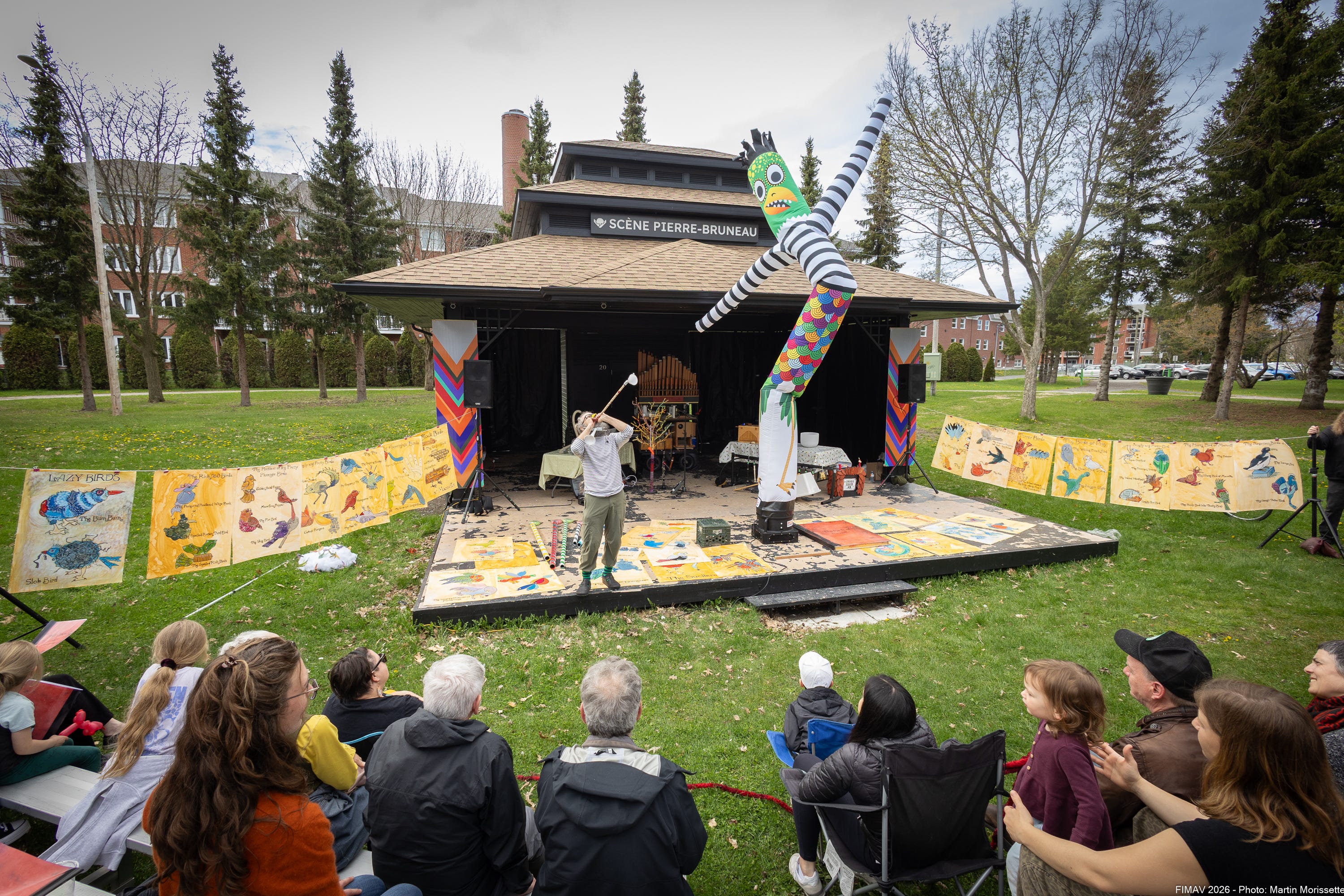
Brampton native Rich Marsella is many things, including a PhD in music education and a prolific releaser of music. The most recent of his 17 albums in The Birds of Marsville, which was adapted to be performed as a solo show… albeit in tandem with a magnificent mechanical street organ gifted to him by another Bramptonian, 88-year old Henk Degraauw. The show featured Rich playing a variety of invented and / or lowbrow instruments (kazoos, fart tubes, and the like) in accompaniment of the midi-controlled mass of pipes and air hoses. It struck the balance of crowd-pleasing, especially for the very young members of the audience given storybooks to follow along with Rich’s gradual unfurling of mythological avian fauna, and playfully complex. There were elements of Harry Partch blended into the carnivalesque / birthday party magician vibe.
The final part of the accessibility initiative was the “Quartier Général.”
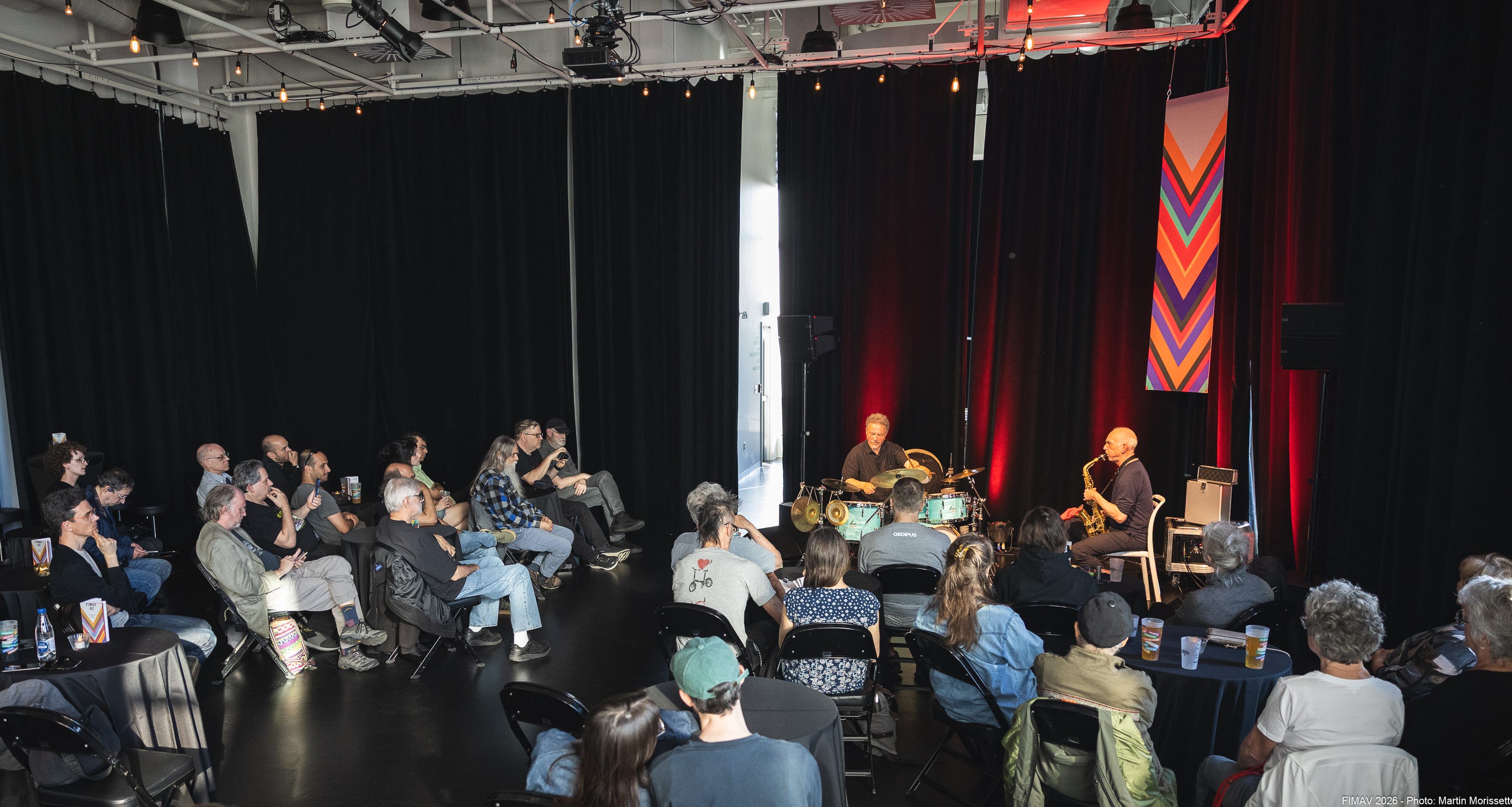
Essentially a compact room just off the second floor lobby of Carré 150, the QG, as it was abbreviated, was the locale for two kinds of daily free performances. The first was a series of free “Informal Concerts” featuring artists already performing at the festival, brought together to improvise for an audience of both passholders or anyone wanting a peek. The second was a kind of cap on each day’s schedule called John Oswald « PlunderphoniCoveralls » that each night featured a different mystery groups of musicians to improvise along with Oswald’s manipulated samples of popular recordings.
The premise was sound, working with a kind of looser play by the artists in attendance, putting them in new contexts to stretch their practice a little. Also allowing free access to a broader audience and bonus material for the paying customers. While these shows were very well attended, what the final audience make-up was was unclear from an informal survey. Full disclosure… I only (briefly) attended one of the informal concerts and none of Oswald shows. I fully intended to, but a combination of show timings… the 6pm slots for informal concerts was precisely when quick mealtime fell for someone trying to see most shows… and the 11pm late shows conflicted with the sleep-slash-writing time required to hit each morning’s review deadlines. The secondhand accounts I gleaned in conversations with other audience members and writers was that there was good stuff to be found, but largely the early evening concerts felt a bit like more of the same. Unfortunately, most folks I spoke to over the course of the festival who attended the Oswald shows reported less than kind opinions about the acoustic improvisation performed along with the manipulated digital recordings.
After so many years of attending the festival, one question that I continually ask myself about FIMAV is whether most people take it in as a collection of discrete shows, or if they measure it based on the totality of each year’s programming. I tend to be in the latter camp, partly because I have the luxury of attending every show, so I can’t help but think of the interconnections.
My first year attending was the 16th edition in 1999. The main reason I was interested was to see Godspeed You! Black Emperor (back when the exclamation point was still at the end of the name) after being introduced to them the fall before at a different festival in Halifax. They were playing on the last day of the festival, so in the meantime the rest of the programming was open for me to discover. The very first festival show I saw was John Zorn with Milford Graves. I was aware of Zorn, but Graves was a new discovery. It quickly became clear that there was a whole world of music I knew very about.
That year’s festival also introduced me to groups featuring Japanese artists Otomo Yoshihide and Sachiko M in a double bill; storied German free jazz saxophonist Peter Brötzmann’s Tentet; avant-folk outsider Kathleen Yearwood; microsound maestro Günter Müller in a duo with Jim O’Rourke (who I knew via Gastr Del Sol); and American Swiss turntablist / conceptual artist Christian Marclay, playing in a trio with Sonic Youth’s Thurston Moore and Lee Ranaldo. That year also had performances by both Canadian cellist Peggy Lee and John Oswald who were at this year’s festival. All of this exposure irrevocably changed my listening habits and guaranteed that I’d return to the festival as often as I could.
While the efforts to expand the audience this year were commendable and a step in the right direction, one thing that seemed to be lacking was the variety of styles and genres listed above to invite different tastes to the table. Eleven of the fourteen ticketed shows (plus the free QG concerts) were jazz or improvised shows. Taken on a case by case basis each was of high quality and would be worth taking in on its own, but in combination it became like a buffet where more than 75% of the offerings were different preparations of squid. Some people love calamari, but if you only like calamari… that’s a lot of calamari. And if you don’t like calamari, well….
The two standout shows from the jazz / improv buffet were Sakina Abdou / Toma Gouband / Marta Warelis and Pat Thomas solo.
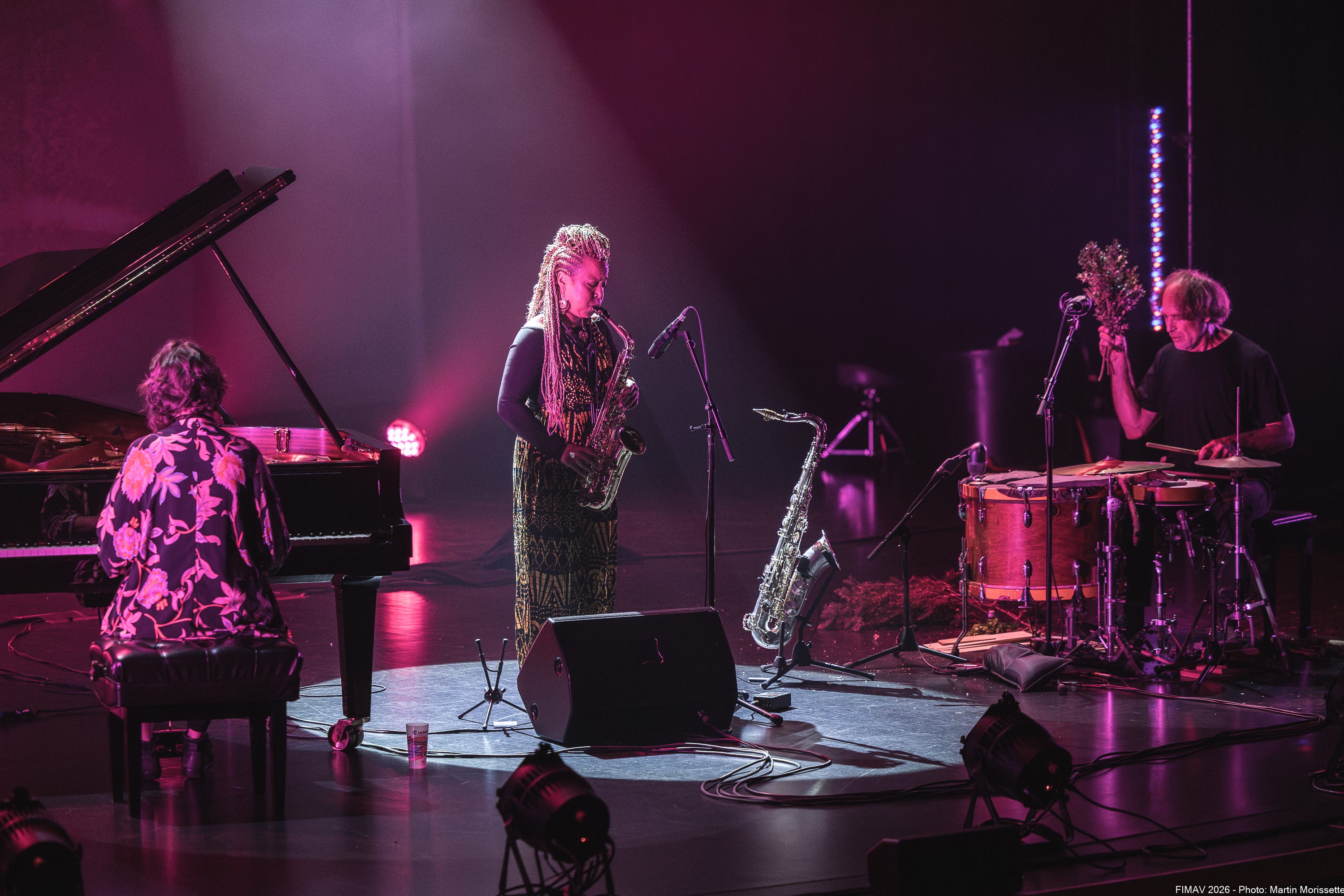
The French / Polish trio collaborated on the 2024 release Hammer, Roll And Leaf and imported their idiosyncratic styles of interplay to a live setting. Their improvisations had less to do with the usual action / reaction / synthesis that typifies trio experiments, they instead found overlapping strategies and followed their own paths across each other at key moments. Abdou’s energetic but formally compact saxophone held the center between Warelis’s freely ranging prepared piano and Gouband’s very idiosyncratic drum kit played on and around with a wide array of objects including metal plates and tree branches. It was a concert that defied any predictions for the direction it might take at any moment.
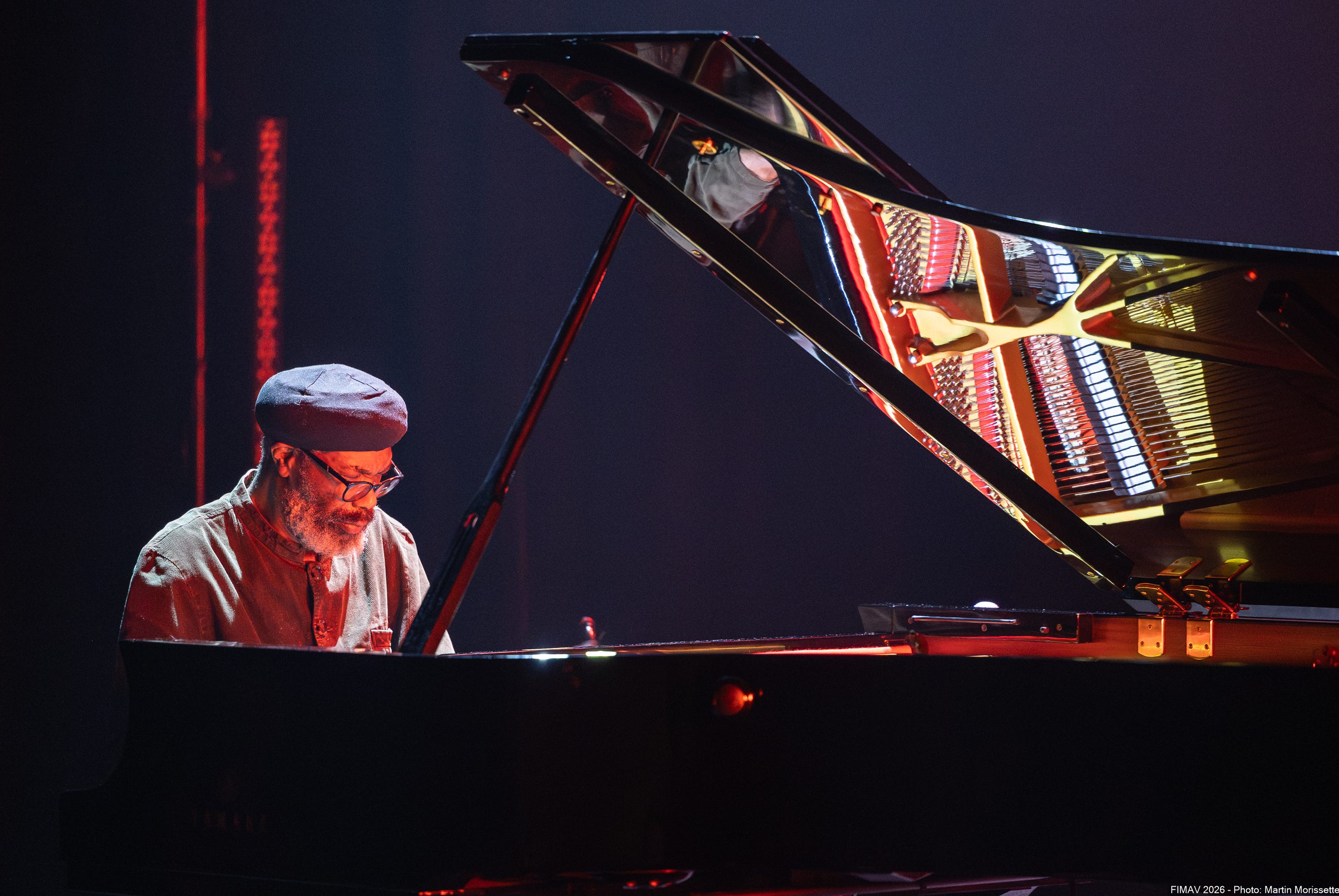
A solo show by Pat Thomas of أحمد [Ahmed] also presented a singular approach to piano improvisation. Thomas’s play had a mostly considered and reflective quality that was in opposition to his quartet’s usual maximalist tendencies. His right hand flipped between repetition of tight key groupings and a free range across the entire keyboard while his left presented structured chords to contain and enhance the energy. It was a highly charged vision of what the overlay of Bill Evans and Cecil Taylor might sound like.
My favourite show of the festival was Rafael Toral’s «Guitar Concert».
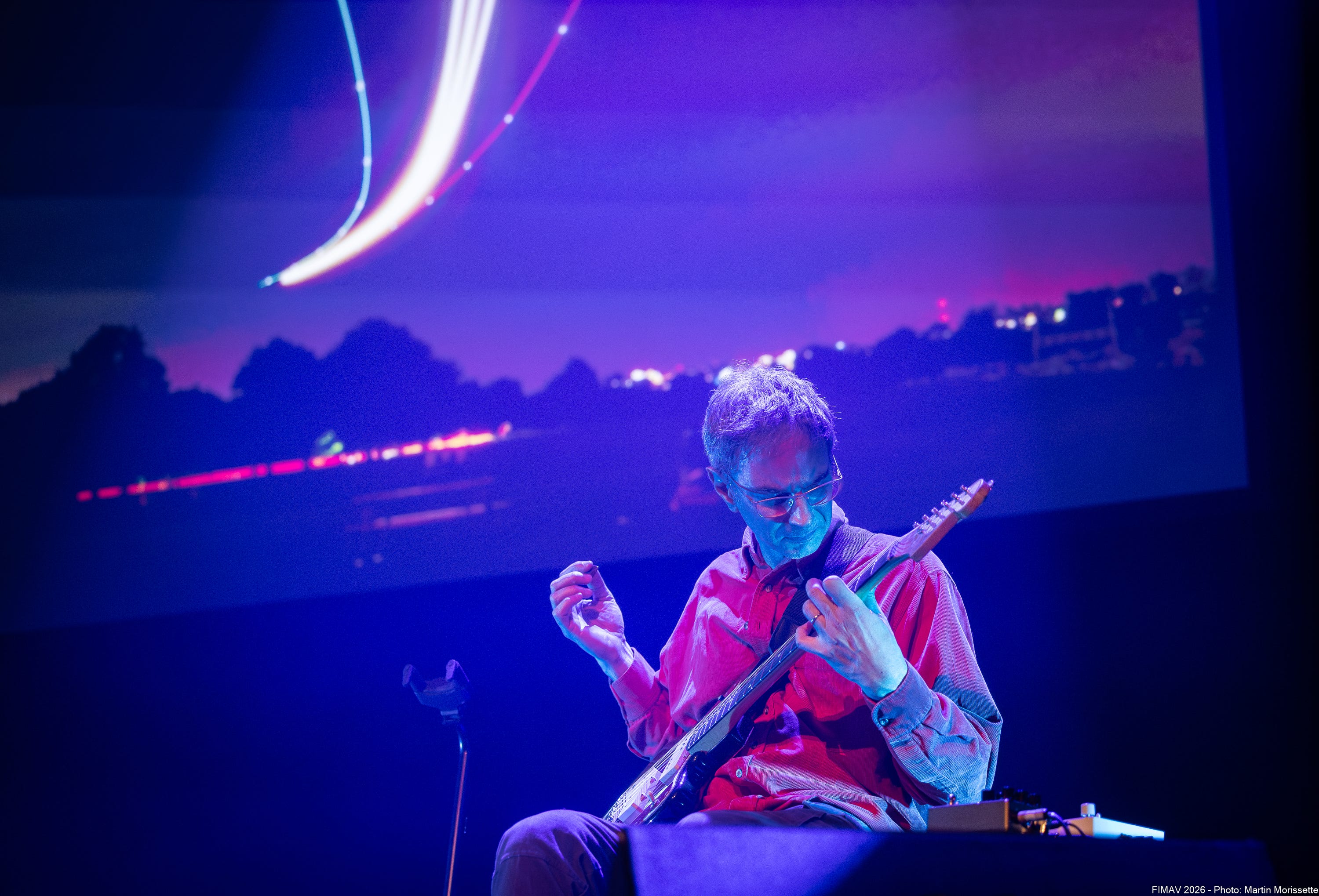
The Portuguese artist presented a concert that was partly an extension of his most recent album Traveling Light and a closing of the figurative and actual loop of his 30+ years of guitar work. Though it arguably had the least in common with the rest of the festival shows, Toral’s current work has included deep considerations of classic jazz ballads. Using an array of pedals and electronics, Toral was able to dive deep into the melodies and harmonics of the pieces, extending them and, for a while, offering them to us as a space to inhabit. For a little over an hour, he built little rooms in musical and personal history and invited us in to listen.
The rest of my individual show reviews can be found over at Exclaim!
The lure of the festival each year is the possibility of encountering artists with a passion for pushing outwards on the boundaries of what is known about modern music in all its genres. But even in the case of music as forward leaning and in the moment as the concerts presented this year, there is also an underlying familiarity in form and expectation. The worlds of acoustic improvisation and experimental scores have a history that is nearly as long as rock music, and as with rock there is a danger of treading already well mapped territory is always there.
The difficulty of uncovering new music that delivers the desired outward push and still find a way to pull in a new audience year after year cannot be overstated. This year’s attempts felt like cracking open a door into a house that might seem labyrinthine to some yet comfortable and a bit overly familiar to others. What comes next is something I look forward to exploring.
All photos courtesy of FIMAV and festival photographer Martin Morrisette.